September 22, 2008
Proof is in: Going Green Creates Jobs
"The bottom line from the California Air Resources Board: The new goals would give the state's economy a modest boost, save residents money, add jobs and even avoid 300 premature deaths via cleaner air." (Sorry Bush, discredited again) Article in SF Chronicle


September 14, 2008
Bay Area mayors band together for green future
One of the biggest impediments to accomplishing the mayors' ambitious agenda, Dellums said, "is getting people to understand there are no options. Either we do it or we do not survive." Article in SF Chronicle
September 10, 2008
Local graywater in Contra Costa Times
http://www.contracostatimes.com/ci_10139889?nclick_ More good press for WaterSprout.
August 30, 2008
How to Do More with Water
[Published in AIA East Bay's ARCHnews September 2008]
Producing drinking water is extremely energy-intensive. ASHRAE reports that energy costs make up 80% of the typical water bill. Efficiency is a first step, but we really need to use locally produced, non-potable water to be sustainable. Our chief uses for non-potable water are toilet flushing and irrigation.
The real excitement comes from integrating architecture into the water cycle. With architecture we “harvest” two sources of non-potable water: rainwater and graywater.

Architectural expression of rainwater collection and storage. Buildings already collect rainwater in leaders and downspouts. Making water part of schematic design leads to rooflines that take on a receptive posture and concrete tanks that serve as basketball courts.
That brings us to graywater. Graywater is bathwater (plus bath sinks and showers). The English spell it greywater. The most harmful things in graywater seem to be detergents and cleansers, but graywater also contains bacteria from our skin. Avoid storing graywater unless it’s treated in an appliance like the BRAC, Pontos Aquacycle, or Aqus. These units filter, chlorinate, and store the water for toilet-flushing. San Francisco and Mendocino County are taking the lead in permitting these appliances in California.

Reconnect architecture with horticulture. A better use for graywater may be irrigation. Laura Allen of the East Bay’s own Graywater Guerillas explained that organic particulates in graywater are good for soil health, turning a waste product into a resource. When our grandparents “threw out the bathwater,” they threw it onto the vegetable garden. We are seeing a resurgence of residential horticulture, using mulch basin technology to distribute the graywater with no storage. The gardens of the Sunset Idea House in San Francisco are irrigated with a system designed by the East Bay firm WaterSprout.
Regulations. Appendix G in the California Plumbing Code (written by sewage disposal engineers, not horticulturalists) regulates graywater. Designing a permittable graywater leachfield makes building your own moonshine distillery seem cheap and easy. The absence of realistic code guidance at the scale of single-family homes has led to elegant R&D by rogue horticulturalists, explained in excellent detail on the web. The Arizona and New Mexico graywater codes allow these clever systems, and we need to pressure our East Bay jurisdictions to emulate them.
Resources
Low tech:
East Bay’s Greywater Guerillas. Laura Allen, co-editor of Dam Nation: Dispatches from the Water Underground. www.greywaterguerrillas.com
Texas Manual on Rainwater Harvesting, online, now in its 3rd Edition.
Arizona Graywater General Permit provides guidelines and requires no review or inspection.
High tech:
High Performing Buildings magazine, Summer 2008 issue on rainwater, subscription free to architects, www.HPBmagazine.org
BRAC, www.bracsystems.com
Pontos Aquacycle (by Hans Grohe), www.pontos-aquacycle.com
Aqus (by WaterSaverTech.com), www.watersavertech.com
Producing drinking water is extremely energy-intensive. ASHRAE reports that energy costs make up 80% of the typical water bill. Efficiency is a first step, but we really need to use locally produced, non-potable water to be sustainable. Our chief uses for non-potable water are toilet flushing and irrigation.
The real excitement comes from integrating architecture into the water cycle. With architecture we “harvest” two sources of non-potable water: rainwater and graywater.

Architectural expression of rainwater collection and storage. Buildings already collect rainwater in leaders and downspouts. Making water part of schematic design leads to rooflines that take on a receptive posture and concrete tanks that serve as basketball courts.
That brings us to graywater. Graywater is bathwater (plus bath sinks and showers). The English spell it greywater. The most harmful things in graywater seem to be detergents and cleansers, but graywater also contains bacteria from our skin. Avoid storing graywater unless it’s treated in an appliance like the BRAC, Pontos Aquacycle, or Aqus. These units filter, chlorinate, and store the water for toilet-flushing. San Francisco and Mendocino County are taking the lead in permitting these appliances in California.

Reconnect architecture with horticulture. A better use for graywater may be irrigation. Laura Allen of the East Bay’s own Graywater Guerillas explained that organic particulates in graywater are good for soil health, turning a waste product into a resource. When our grandparents “threw out the bathwater,” they threw it onto the vegetable garden. We are seeing a resurgence of residential horticulture, using mulch basin technology to distribute the graywater with no storage. The gardens of the Sunset Idea House in San Francisco are irrigated with a system designed by the East Bay firm WaterSprout.
Regulations. Appendix G in the California Plumbing Code (written by sewage disposal engineers, not horticulturalists) regulates graywater. Designing a permittable graywater leachfield makes building your own moonshine distillery seem cheap and easy. The absence of realistic code guidance at the scale of single-family homes has led to elegant R&D by rogue horticulturalists, explained in excellent detail on the web. The Arizona and New Mexico graywater codes allow these clever systems, and we need to pressure our East Bay jurisdictions to emulate them.
Resources
Low tech:
East Bay’s Greywater Guerillas. Laura Allen, co-editor of Dam Nation: Dispatches from the Water Underground. www.greywaterguerrillas.com
Texas Manual on Rainwater Harvesting, online, now in its 3rd Edition.
Arizona Graywater General Permit provides guidelines and requires no review or inspection.
High tech:
High Performing Buildings magazine, Summer 2008 issue on rainwater, subscription free to architects, www.HPBmagazine.org
BRAC, www.bracsystems.com
Pontos Aquacycle (by Hans Grohe), www.pontos-aquacycle.com
Aqus (by WaterSaverTech.com), www.watersavertech.com
August 12, 2008
Designing Sun Control
[Published in AIA East Bay's ARCHnews May 2008]
Until the energy glut of the 1900s, architects designed the architectural shell to reduce loads. Reducing the cooling load has a positive ripple effect through all the systems of a building. Cooling equipment can be downsized, perhaps crossing a threshold to a less intensive cooling system. Fan power and duct sizes can be reduced. Less space is needed for mechanical equipment.
One of the easiest ways we can do this again is by keeping the sun out of windows. Properly sized overhangs are a great place to start with sun control. A fixed overhang will admit low winter sun when the radiation might be useful for heating, and exclude high summer sun when the indoor climate is too hot already.
How do we properly size overhangs? First, we have to know what seasons need shading. For this, a good tool is Climate Consultant 3 software developed at UCLA. The newest version works on both Mac and PC systems, so there is no excuse for not using it. A free copy can be downloaded from: http://www2.aud.ucla.edu/energy-design-tools/.
The program’s Sun Shading Chart will show graphically which times of the day and year that solar heat is useful for the indoor climate. At my office, we start each project by printing charts from Climate Consultant to guide our schematic design.
Next, we have to design geometry that shades in the hours and seasons we’ve identified. Until the advent of an easy 3D program with solar shading like SketchUp, we had to use mystical tools like the Pilkington Sun Angle Calculator and design in plan and section using a protractor. (SketchUp is available from: http://www.sketchup.com.)
In SketchUp, I can quickly draw a test overhang and then turn on the shadows. Using the sun shading controls, I can move the sun through the seasons and watch the overhang’s shadow move up and down the window below it. Then I resize the overhang to shade farther into spring and fall, if that’s what my Climate Consultant chart indicated.
Using shadows in SketchUp, it’s easy to see that some orientations have no overhang solution. Even vertical fins cannot keep low sun out of windows that face due east or west. On a current project, we designed operable, louvered shutters that the occupants will close at night before leaving the building, and open in late morning during a coffee break. We cut the simulated cooling load by 50% by shading these windows between sunrise and 10:30 am, when the sun is too low for overhangs to work. More synergies can come from such a layering of the window openings: the shutter design creates the opportunity for a lockable security system over the east windows, and the potential for leaving the windows open at night for night-ventilation cooling. We can pay for the shutters using savings from the mechanical system.
Sun control is usually one of the most cost effective measures to squash the loads on mechanical equipment, which is the key to having a low-energy building. Using Climate Consultant 3 and SketchUp, shading design becomes very straightforward. The next step is simulating the shading design in an energy model to see the ripple effects throughout the building system.
Until the energy glut of the 1900s, architects designed the architectural shell to reduce loads. Reducing the cooling load has a positive ripple effect through all the systems of a building. Cooling equipment can be downsized, perhaps crossing a threshold to a less intensive cooling system. Fan power and duct sizes can be reduced. Less space is needed for mechanical equipment.
One of the easiest ways we can do this again is by keeping the sun out of windows. Properly sized overhangs are a great place to start with sun control. A fixed overhang will admit low winter sun when the radiation might be useful for heating, and exclude high summer sun when the indoor climate is too hot already.
How do we properly size overhangs? First, we have to know what seasons need shading. For this, a good tool is Climate Consultant 3 software developed at UCLA. The newest version works on both Mac and PC systems, so there is no excuse for not using it. A free copy can be downloaded from: http://www2.aud.ucla.edu/energy-design-tools/.
The program’s Sun Shading Chart will show graphically which times of the day and year that solar heat is useful for the indoor climate. At my office, we start each project by printing charts from Climate Consultant to guide our schematic design.
Next, we have to design geometry that shades in the hours and seasons we’ve identified. Until the advent of an easy 3D program with solar shading like SketchUp, we had to use mystical tools like the Pilkington Sun Angle Calculator and design in plan and section using a protractor. (SketchUp is available from: http://www.sketchup.com.)
In SketchUp, I can quickly draw a test overhang and then turn on the shadows. Using the sun shading controls, I can move the sun through the seasons and watch the overhang’s shadow move up and down the window below it. Then I resize the overhang to shade farther into spring and fall, if that’s what my Climate Consultant chart indicated.
Using shadows in SketchUp, it’s easy to see that some orientations have no overhang solution. Even vertical fins cannot keep low sun out of windows that face due east or west. On a current project, we designed operable, louvered shutters that the occupants will close at night before leaving the building, and open in late morning during a coffee break. We cut the simulated cooling load by 50% by shading these windows between sunrise and 10:30 am, when the sun is too low for overhangs to work. More synergies can come from such a layering of the window openings: the shutter design creates the opportunity for a lockable security system over the east windows, and the potential for leaving the windows open at night for night-ventilation cooling. We can pay for the shutters using savings from the mechanical system.
Sun control is usually one of the most cost effective measures to squash the loads on mechanical equipment, which is the key to having a low-energy building. Using Climate Consultant 3 and SketchUp, shading design becomes very straightforward. The next step is simulating the shading design in an energy model to see the ripple effects throughout the building system.
The “Passiv Haus” Standard: Houses without heaters
[Published in AIA East Bay's ARCHnews July 2008]
Imagine on a cold winter day, a house can be heated solely by people, lights, equipment, and sunshine. A Passive House is a building with enough insulation and air-tightness to eliminate the need for conventional space heating. After the 1970s energy crisis, architects in the Northeastern U.S. developed “superinsulation” (e.g. double-stud walls) and fresh-air ventilation. In the last fifteen years, European architects have perfected these innovations to create the Passive House Standard. This architectural formula will become part of the European Union’s building code by 2012. It could also be the most elegant and inexpensive means to reduce building energy use in the Bay Area.
How does it work? As we increase the insulation and air-tightness of a building envelope, the building becomes more comfortable and saves more energy, but it also becomes more expensive to build. However, there is a threshold of insulation and air-tightness at which the heating system becomes superfluous, and the total cost falls to the price-point of conventional construction. This is the key to designing a Passive House: simplify the mechanical system to pay for envelope upgrades.
It gets better. Because insulation blocks sound, the interior of a Passive building is quieter than a conventional building. Being inside engenders a feeling of serenity to know that the building is perfectly balanced between internal and external heat. Considering the building metaphorically, comfort is no longer attained with fire, but with breath. To cool off, one opens the windows. To warm up, one closes them.
Passive buildings are also healthier than conventional buildings, because they are flooded with filtered outdoor air. By using a fresh-air ventilator with heat recovery (an HRV or ERV), a Passive House loses less heat than a conventional building that is fully buttoned-up. Furthermore, the ductwork can be smaller and simpler, since it only provides fresh air.
So how do we design Passive buildings for the Bay Area? We turn our typical design sequence on its head by starting with a piece of mechanical equipment (the HRV). Next, we “size” the architectural shell to meet the heating loads, the way an engineer would have sized a boiler in the past. The calculations can be done on a napkin, but planning software is available. See the resources listed at the end of this article.
East Bay architect Nabih Tahan used the “Passiv Haus Planning Package” (PHPP) software to design a Passive House in Berkeley. He raised and remodeled a typical early-1900s bungalow. When I paid him a visit recently, I expected to see thick walls and high-tech windows. Surprisingly, Tahan used 2x6 studs at 24” centers, 2” of rigid insulation over the original 2x4 walls, and conventional windows. He paid careful attention to airsealing by caulking and foaming gaps in the plywood sheathing (continuous through the attic), and gasketing under sill plates.
Ironically, Tahan had trouble passing the Title 24 Energy Code. California’s current Alternative Compliance software cannot understand a house without a heater, so in order to get his certificate, he had to install $35 electric baseboards. When a basic gas furnace costs $8,000 and radiant floors cost upwards of $20,000, the upfront cost advantage of Passive buildings is clear. As if we needed more incentive, forthcoming revisions to the Title 24 Energy Code will mandate mechanical ventilation for houses—the Passive House essential. All that’s left to do is seal the gaps and get rid of the heater.
The following resources offer more information, including the PHPP software:
The Passivhaus Institut in Darmstadt, Germany: http://www.passiv.de/
The Passive House Institute, US: http://www.passivehouse.us
Passive House, Wikipedia: http://en.wikipedia.org/wiki/Passive_house
Sill Plate Gasket: Owens Corning Foam SEAL-R
Imagine on a cold winter day, a house can be heated solely by people, lights, equipment, and sunshine. A Passive House is a building with enough insulation and air-tightness to eliminate the need for conventional space heating. After the 1970s energy crisis, architects in the Northeastern U.S. developed “superinsulation” (e.g. double-stud walls) and fresh-air ventilation. In the last fifteen years, European architects have perfected these innovations to create the Passive House Standard. This architectural formula will become part of the European Union’s building code by 2012. It could also be the most elegant and inexpensive means to reduce building energy use in the Bay Area.
How does it work? As we increase the insulation and air-tightness of a building envelope, the building becomes more comfortable and saves more energy, but it also becomes more expensive to build. However, there is a threshold of insulation and air-tightness at which the heating system becomes superfluous, and the total cost falls to the price-point of conventional construction. This is the key to designing a Passive House: simplify the mechanical system to pay for envelope upgrades.
It gets better. Because insulation blocks sound, the interior of a Passive building is quieter than a conventional building. Being inside engenders a feeling of serenity to know that the building is perfectly balanced between internal and external heat. Considering the building metaphorically, comfort is no longer attained with fire, but with breath. To cool off, one opens the windows. To warm up, one closes them.
Passive buildings are also healthier than conventional buildings, because they are flooded with filtered outdoor air. By using a fresh-air ventilator with heat recovery (an HRV or ERV), a Passive House loses less heat than a conventional building that is fully buttoned-up. Furthermore, the ductwork can be smaller and simpler, since it only provides fresh air.
So how do we design Passive buildings for the Bay Area? We turn our typical design sequence on its head by starting with a piece of mechanical equipment (the HRV). Next, we “size” the architectural shell to meet the heating loads, the way an engineer would have sized a boiler in the past. The calculations can be done on a napkin, but planning software is available. See the resources listed at the end of this article.
East Bay architect Nabih Tahan used the “Passiv Haus Planning Package” (PHPP) software to design a Passive House in Berkeley. He raised and remodeled a typical early-1900s bungalow. When I paid him a visit recently, I expected to see thick walls and high-tech windows. Surprisingly, Tahan used 2x6 studs at 24” centers, 2” of rigid insulation over the original 2x4 walls, and conventional windows. He paid careful attention to airsealing by caulking and foaming gaps in the plywood sheathing (continuous through the attic), and gasketing under sill plates.
Ironically, Tahan had trouble passing the Title 24 Energy Code. California’s current Alternative Compliance software cannot understand a house without a heater, so in order to get his certificate, he had to install $35 electric baseboards. When a basic gas furnace costs $8,000 and radiant floors cost upwards of $20,000, the upfront cost advantage of Passive buildings is clear. As if we needed more incentive, forthcoming revisions to the Title 24 Energy Code will mandate mechanical ventilation for houses—the Passive House essential. All that’s left to do is seal the gaps and get rid of the heater.
The following resources offer more information, including the PHPP software:
The Passivhaus Institut in Darmstadt, Germany: http://www.passiv.de/
The Passive House Institute, US: http://www.passivehouse.us
Passive House, Wikipedia: http://en.wikipedia.org/wiki/Passive_house
Sill Plate Gasket: Owens Corning Foam SEAL-R
November 28, 2005
Intersections of the architectural shell and mechanical equipment
Why energy efficiency is not only a matter for technicians, but also for achitects.
Common intersections of the architectural shell (designed for immediate experience by people) and the mechanical equipment (designed separately, to maintain indoor climate):
What else fits on this list? Are there common integration solutions that can be described generically for different climates? Are there common conflicts between the optimal configuration of the architectural shell for aesthetic experience and climate performance? Can we catalog these in a generic way?
Common intersections of the architectural shell (designed for immediate experience by people) and the mechanical equipment (designed separately, to maintain indoor climate):
- Daylighting to reduce electric lighting power use and cooling load. Requires a thin section depth, lots of skin area relative to floor area, and good window/skylight design
- Solar heat gain during heating season (desired). Requires orientation, massing, window/skylight design
- Solar heat gain during cooling months (undesired).
- Glare control from daylight.
- Tectonics of energy strategy and building operations.
- Social use of space related to heat, cool, light, breezes.
- Facade and window design.
- Shade design related to cooling load and glare control.
- Control of personal environment, especially in office and classroom design.
- Exposure of structure and indoor climate control systems; integration with look and feel of the building.
- Spatial requirements and architectural integration of climate control system.
- Room volumes related to thermal comfort.
- Solar gain to different parts of the building; allocation of program areas.
- Lighting control systems relative to activities, architectural shell, and outdoor climate.
- Structural design, cladding design, materials sourcing.
- Basic scheme; form and massing relative to local climate, sun and wind patterns.
- Thermal capacity, storage of heat or cool in the building fabric.
What else fits on this list? Are there common integration solutions that can be described generically for different climates? Are there common conflicts between the optimal configuration of the architectural shell for aesthetic experience and climate performance? Can we catalog these in a generic way?
How does better environmental performance make buildings better for people?
"I don't care how much energy you saved [through efficient design, etc.]; if people don't like to be there, you've wasted every bit of it." Howard Brandston, lighting designer, personal communication, 2005.
Higher environmental performance doesn't necessarily make buildings better places for people. But it does make the whole landscape a better place for people. Let's try to untangle the relationship between technological means and ultimate architectural ends.
Architecture is about making beautiful places that make people feel good. Architects use construction technology to achieve this goal. For those obsessed with energy efficient technology, "ecological correctness" can become an end in itself, causing the design team to lose sight of the ultimate goal. Technology serves no other purpose but to be in service of places that people enjoy.
Fundamentally architects must be humanists, but they can only achieve beautiful and comfortable places by knowing and using technology. The architect must also be a technologist.
Technological improvements in buildings accrue benefits perhaps more in the landscape and socioeconomic system than in the experience of the building itself. Through this mechanism, architects can make the total environment better for people, rather than looking narrowly at a building.
The ecological design initiative recognizes that people live in the landscape, not just in buildings, and that outdated building practices of the last century are degrading the landscape. Buildings and cities must also be transformed to have a positive energy future away from fossil fuels. Imagine a Persian carpet as the fabric of human infrastructure spread across the landscape; beautiful patterns. A single architectural project is attached to a thread in one location. That thread and its effects run in several directions throughout the landscape. Replacing the thread has an impact on the whole fabric, not just on the localized pattern alone.
A single building project has a great potential for positive impacts throughout the landscape and fabric of human infrastructure. Ecological design takes advantage of this opportunity to improve our infrastructure to make it more comfortable and beautiful for people.
Higher ecological performance in buildings won't necessarily make buildings better for people, but it will make the whole fabric of human infrastructure better for people. Buildings are the means. The technology and construction practices used to make buildings are the ultimate means.
Higher environmental performance doesn't necessarily make buildings better places for people. But it does make the whole landscape a better place for people. Let's try to untangle the relationship between technological means and ultimate architectural ends.
Architecture is about making beautiful places that make people feel good. Architects use construction technology to achieve this goal. For those obsessed with energy efficient technology, "ecological correctness" can become an end in itself, causing the design team to lose sight of the ultimate goal. Technology serves no other purpose but to be in service of places that people enjoy.
Fundamentally architects must be humanists, but they can only achieve beautiful and comfortable places by knowing and using technology. The architect must also be a technologist.
Technological improvements in buildings accrue benefits perhaps more in the landscape and socioeconomic system than in the experience of the building itself. Through this mechanism, architects can make the total environment better for people, rather than looking narrowly at a building.
The ecological design initiative recognizes that people live in the landscape, not just in buildings, and that outdated building practices of the last century are degrading the landscape. Buildings and cities must also be transformed to have a positive energy future away from fossil fuels. Imagine a Persian carpet as the fabric of human infrastructure spread across the landscape; beautiful patterns. A single architectural project is attached to a thread in one location. That thread and its effects run in several directions throughout the landscape. Replacing the thread has an impact on the whole fabric, not just on the localized pattern alone.
A single building project has a great potential for positive impacts throughout the landscape and fabric of human infrastructure. Ecological design takes advantage of this opportunity to improve our infrastructure to make it more comfortable and beautiful for people.
Higher ecological performance in buildings won't necessarily make buildings better for people, but it will make the whole fabric of human infrastructure better for people. Buildings are the means. The technology and construction practices used to make buildings are the ultimate means.
What is ecological design?
Ecological design means:
1. Including ecological performance as part of the definition of architectural quality, along with formal expression and human comfort
2. Using a generic design process of:
2a. Measurable ecological objectives set in the earliest planning phase of the project;
2b. Repeated design cycles of simulation and assessment to achieve objectives;
2c. Evaluation of architectural quality after occupancy and open dissemination of results
Ecological design can be better defined as a process than as a product. The process has the generic characteristics described above.
The form of contractual relationships between actors in the building process usually has a great effect on the resulting product. A review of common contractual arrangements and their affects on ecological outcomes will follow in coming posts.
What contractual relationships between actors in the building process are necessary for today's architectural quality? See coming postings.
1. Including ecological performance as part of the definition of architectural quality, along with formal expression and human comfort
2. Using a generic design process of:
2a. Measurable ecological objectives set in the earliest planning phase of the project;
2b. Repeated design cycles of simulation and assessment to achieve objectives;
2c. Evaluation of architectural quality after occupancy and open dissemination of results
Ecological design can be better defined as a process than as a product. The process has the generic characteristics described above.
The form of contractual relationships between actors in the building process usually has a great effect on the resulting product. A review of common contractual arrangements and their affects on ecological outcomes will follow in coming posts.
What contractual relationships between actors in the building process are necessary for today's architectural quality? See coming postings.
Expanded role of architects in making buildings
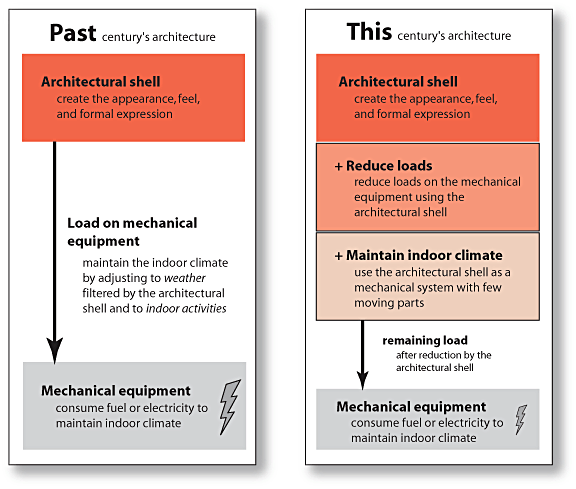
This diagram illustrates the expanded role that architects need to play in making this century's buildings. The dual goals of creating places that make people feel good and high environmental performance require that the architectural shell acts as the primary means of maintaining the desired indoor climate. Mechanical equipment became the primary means for maintaining climate in the past century, but the era for that architecture is over.
Two things must happen in order for the architectural shell to help maintain indoor climate, rather than just to give the building's appearance. First, our definition of architectural quality must return to what it once was: quality architecture is a beautiful integration of formal expression and environmental performance that creates a place where people like to be. This definition means that environmental performance is just as important as formal expression, and that a design neglecting either is not a quality design.
Second, for the architectural shell to help maintain indoor climate, architects need to know more about building physics and engineering principles. Knowledge only of conceptual development, program allocation, and formal expression will not suffice for creating this century's architecture. Such a limited set of skills ensures that the architect will remain nothing more than a stylist for the elite 10% of expensive buildings constructed every year.
November 25, 2005
What does the end of cheap oil mean for architects?
"We have all been enjoying the greatest party the world has ever seen: the great oil party," according to Kjell Aleklett, president of the Association for the Study of Peak Oil (ASPO) and a physics professor at Uppsala University in Sweden.
"After the climax comes the decline, when we have to sober up and face the fact that the party is coming to an end," he wrote in a paper earlier this year.
A great site for getting up to speed on the world energy situation:
http://www.dkosopedia.com/index.php/Peak_Oil
Once a designer is up to speed on the situation, a designer starts to think about solving problems. A good building should last at least 100 years, barring accidents. The grandchildren of today's architecture students will be living in these buildings: 2105 is not that far away. In the next 100 years, oil production will have fallen off dramatically.
What fuel will we use for transportation, and for powering our buildings? It's more than obvious that we must immediately begin a transformation of our energy infrastructure so we have something, let alone something nice, for our grandchildren living in our buildings in 2105.
You won't hear anything about this in the US media, especially not from the US government. For government to acknowledge the energy reality they would have to suggest that people must change their lifestyles. We will not be able to drive cars as much in the future, we'll need public transit, and we'll need denser urban development and architecture to make this possible.
Fortunately the Europeans are not afraid of the future. In Sweden they see the challenge of infrastructure transformation over the next 100 years as an exciting opportunity. I share this view, and my goal is to convince architects to get excited, to educate themselves for the new skills they'll need, and to take more responsibility in the lifecycles of buildings. Architects must make themselves relevant to building production if they want any voice in how the American landscape will be transformed this century.
Architects should take up this responsibility because traditionally we were humanists who used technical knowledge to create beautiful places that made people feel good.
Be sure that the responsibility for transforming our cities and infrastructure will be taken up by someone. Shall it be technical professionals who arrive at technical solutions, without regard for beauty and human well-being? Instead, I believe the responsibility should be taken up by architects who have returned to their roots.
Getting back to what matters in the profession
Marcus Vitruvius Pollio, a Roman who lived in the first millenium, in his Ten Books of Architecture defined the architect's profession as the integration of firmitas, utilitas, and venustas. This is usually translated as firmness, commodity, and delight.
It has only been a short time, during the last century, that mainstream architectural culture trivialized firmness and commodity as fundamental to architectural quality. In a defensive response to the erosion of professional territory to engineering and construction specialists, Architecture became primarily about formal expression with regard to Concept--anything other than pure concept was art compromised, giving still more ground away to other disciplines. This nonsense of professional rivalry has no place in the architecture of this century. Architectural quality in this century must once again be evaluated as an integration of human comfort, environmental performance, and formal expression. Architects today are not trained for this; they are trained to be fashion designers, who are irrelevant for producing 90% of the new buildings made each year.
We architects must learn engineering again. We can start by doing some simple math. Buildings consume about 40% of our energy production in the US. Transportation consumes another 20-30%. We'll have replaced nearly half of American buildings, and renovated a larger fraction, by 2050 when today's graduates from architecture school are retiring. Thus, the arts of architects and urban designers/planners can affect 30-35% of America's energy use by our grandchildren's time, even more considering renovations.
Next steps:
How do energy realities translate into specific performance goals for architecture? See the next postings.
What does energy conservation in buildings have to do with the architect's goal of making beautiful places that make people feel good? See the next postings.
"After the climax comes the decline, when we have to sober up and face the fact that the party is coming to an end," he wrote in a paper earlier this year.
A great site for getting up to speed on the world energy situation:
http://www.dkosopedia.com/index.php/Peak_Oil
Once a designer is up to speed on the situation, a designer starts to think about solving problems. A good building should last at least 100 years, barring accidents. The grandchildren of today's architecture students will be living in these buildings: 2105 is not that far away. In the next 100 years, oil production will have fallen off dramatically.
What fuel will we use for transportation, and for powering our buildings? It's more than obvious that we must immediately begin a transformation of our energy infrastructure so we have something, let alone something nice, for our grandchildren living in our buildings in 2105.
You won't hear anything about this in the US media, especially not from the US government. For government to acknowledge the energy reality they would have to suggest that people must change their lifestyles. We will not be able to drive cars as much in the future, we'll need public transit, and we'll need denser urban development and architecture to make this possible.
Fortunately the Europeans are not afraid of the future. In Sweden they see the challenge of infrastructure transformation over the next 100 years as an exciting opportunity. I share this view, and my goal is to convince architects to get excited, to educate themselves for the new skills they'll need, and to take more responsibility in the lifecycles of buildings. Architects must make themselves relevant to building production if they want any voice in how the American landscape will be transformed this century.
Architects should take up this responsibility because traditionally we were humanists who used technical knowledge to create beautiful places that made people feel good.
Be sure that the responsibility for transforming our cities and infrastructure will be taken up by someone. Shall it be technical professionals who arrive at technical solutions, without regard for beauty and human well-being? Instead, I believe the responsibility should be taken up by architects who have returned to their roots.
Getting back to what matters in the profession
Marcus Vitruvius Pollio, a Roman who lived in the first millenium, in his Ten Books of Architecture defined the architect's profession as the integration of firmitas, utilitas, and venustas. This is usually translated as firmness, commodity, and delight.
It has only been a short time, during the last century, that mainstream architectural culture trivialized firmness and commodity as fundamental to architectural quality. In a defensive response to the erosion of professional territory to engineering and construction specialists, Architecture became primarily about formal expression with regard to Concept--anything other than pure concept was art compromised, giving still more ground away to other disciplines. This nonsense of professional rivalry has no place in the architecture of this century. Architectural quality in this century must once again be evaluated as an integration of human comfort, environmental performance, and formal expression. Architects today are not trained for this; they are trained to be fashion designers, who are irrelevant for producing 90% of the new buildings made each year.
We architects must learn engineering again. We can start by doing some simple math. Buildings consume about 40% of our energy production in the US. Transportation consumes another 20-30%. We'll have replaced nearly half of American buildings, and renovated a larger fraction, by 2050 when today's graduates from architecture school are retiring. Thus, the arts of architects and urban designers/planners can affect 30-35% of America's energy use by our grandchildren's time, even more considering renovations.
Next steps:
How do energy realities translate into specific performance goals for architecture? See the next postings.
What does energy conservation in buildings have to do with the architect's goal of making beautiful places that make people feel good? See the next postings.
November 18, 2005
Introduction to the Blog
 A great opportunity now exists for architects to broaden their professional responsibilities and again make themselves relevant to making buildings. Mainstream architectural culture in the US has taken the profession on a path of increasing irrelevance to the process of making buildings and our built environment. Architects have made themselves into building stylists, merely an extra expense. However, human society's slow ecological disaster and inevitable transformation of infrastructure over the next century create an opportunity for the profession. I'll outline some arguments for this position using this blog as a forum for dialogue.
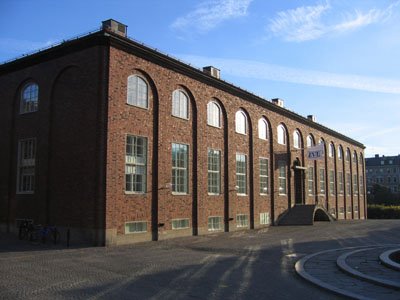
I'm a master of architecture student who lived in Seattle for 10 years, but now I've moved to the San Francisco Bay Area. I am studying the process of making buildings for three months in Stockholm this fall, funded by the Valle scholarship and hosted by the IVL Swedish Environmental Research Institute (photo). I've long believed that design and construction are avenues for applying and testing knowledge generated in environmental research fields.
The environmental dialogue here is so advanced relative to my exposure from within my architecture department in the US that it's taken two months to catch up and get oriented. It's also taken two months to begin to frame the sustainable development discussion in a way appreciable to US architects.
What's architecture got to do with it?
Our standard of living and quality of life depend on the way in which ecosystems operate. This may be weakly apparent in developed, information-industry countries because in these countries we've outsourced most of our ecological dependence to other parts of the earth. Developed countries are as dependent on ecosystems for their standards of living as any country. Compare the ecological footprint (the amount of land required to supply the standard of living) of a person in the US to a person in any poorer country.
This is nothing new to most readers: our infrastructure and the conventional way we've procured it are in trouble because we have ecological degradation underway that is undermining our economy and security. The Millenium Ecosystem Assessment (MA) "was carried out between 2001 and 2005 to assess the consequences of ecosystem change for human well-being and to establish the scientific basis for actions needed to enhance the conservation and sustainable use of ecosystems and their contributions to human well-being." If you want to familiarize yourself with the situation, the MA is a good outline that explains opportunities for different sectors of the economy.
Architects have a great opportunity to return to relevancy in the building industry. The spatial relationships of home and work, and the choice of technology in how these places are constructed, are key determinants of our collective impact on ecosystems. Architects have potential as major decision-makers because historically they were once humanists who understood technology and its effects on social spaces. Architects today are not major decision-makers guiding the development of our infrastructure because they have marginalized themselves to become stylists, sub-consultants, and branding designers for buildings.
The timeframe is pertinent to young architects starting their professional life. We will replace and rebuild 1/3 to 1/2 of our infrastructure in the next 50 years. The buildings, transportation systems, and places we build in the coming years will be the infrastructure for our children and grandchildren's everyday life. They will unfortunately live in a world more unstable and vulnerable to disaster than ours today.
We've got to get our carbon dioxide emissions cut down, reduce our demand for primary materials, and transition to mostly renewable sources of primary energy supply. (The references and discussion on this will come in future posts.) Buildings are big energy guzzlers. It's commonly quoted that buildings account for the consumption of about 40% of our primary energy. This is a greater share than any other segment of our infrastructure. [See "Architects Pollute" article in Metropolis] For architects, this means that buildings have to become quite more energy efficient than they are now. They've also got to become fundamentally better places for people, so we can keep using their core parts longer instead of tearing them down.
To make most new buildings by these new standards (that is, 1. use much less energy, 2. fundamentally better places for people) the architectural profession must change, and the building industry must change. The professional status quo will continue producing status quo buildings. Quoting from the Millenium Ecosystem Assessment (MA): "The challenge of reversing the degradation of ecosystems while meeting increasing demands for their services can be partially met under some scenarios that the MA has considered, but these involve significant changes in policies, institutions, and practices that are not currently under way." The posts on this blog lay out significant changes for the architectural profession that can partially mitigate the degradation of the landscape, and reclaim a relevant role in the building industry for architects. Since I'm only familiar with architecture, other roles in the building industry are discussed only with regard to contractual relationships between building professionals.
This is nothing new to most readers: our infrastructure and the conventional way we've procured it are in trouble because we have ecological degradation underway that is undermining our economy and security. The Millenium Ecosystem Assessment (MA) "was carried out between 2001 and 2005 to assess the consequences of ecosystem change for human well-being and to establish the scientific basis for actions needed to enhance the conservation and sustainable use of ecosystems and their contributions to human well-being." If you want to familiarize yourself with the situation, the MA is a good outline that explains opportunities for different sectors of the economy.
Architects have a great opportunity to return to relevancy in the building industry. The spatial relationships of home and work, and the choice of technology in how these places are constructed, are key determinants of our collective impact on ecosystems. Architects have potential as major decision-makers because historically they were once humanists who understood technology and its effects on social spaces. Architects today are not major decision-makers guiding the development of our infrastructure because they have marginalized themselves to become stylists, sub-consultants, and branding designers for buildings.
The timeframe is pertinent to young architects starting their professional life. We will replace and rebuild 1/3 to 1/2 of our infrastructure in the next 50 years. The buildings, transportation systems, and places we build in the coming years will be the infrastructure for our children and grandchildren's everyday life. They will unfortunately live in a world more unstable and vulnerable to disaster than ours today.
We've got to get our carbon dioxide emissions cut down, reduce our demand for primary materials, and transition to mostly renewable sources of primary energy supply. (The references and discussion on this will come in future posts.) Buildings are big energy guzzlers. It's commonly quoted that buildings account for the consumption of about 40% of our primary energy. This is a greater share than any other segment of our infrastructure. [See "Architects Pollute" article in Metropolis] For architects, this means that buildings have to become quite more energy efficient than they are now. They've also got to become fundamentally better places for people, so we can keep using their core parts longer instead of tearing them down.
To make most new buildings by these new standards (that is, 1. use much less energy, 2. fundamentally better places for people) the architectural profession must change, and the building industry must change. The professional status quo will continue producing status quo buildings. Quoting from the Millenium Ecosystem Assessment (MA): "The challenge of reversing the degradation of ecosystems while meeting increasing demands for their services can be partially met under some scenarios that the MA has considered, but these involve significant changes in policies, institutions, and practices that are not currently under way." The posts on this blog lay out significant changes for the architectural profession that can partially mitigate the degradation of the landscape, and reclaim a relevant role in the building industry for architects. Since I'm only familiar with architecture, other roles in the building industry are discussed only with regard to contractual relationships between building professionals.
Architecture has gone from Master Builder to sub-consultancy
Peter Walker analyses the drift of the architectural profession into a sub-consultancy, away from a position of influence between client and contractor, and towards that of architectural stylist with real liabilities". Interesting ideas in a dozen articles on this site.
Subscribe to:
Posts (Atom)